Does expensive camera gear make you a better wildlife photographer? It’s one of the biggest questions in wildlife photography. From professional camera bodies and super-telephoto lenses to advanced autofocus systems, photographers constantly seek better equipment to capture extraordinary moments in nature.
But here’s the real question: Who is supreme in wildlife photography—the photographer or the gear?
Wildlife photography is a demanding art that requires patience, technical knowledge, an understanding of animal behaviour, and the ability to anticipate fleeting moments. While the right camera and lens can significantly improve your chances of capturing a photograph, equipment alone cannot guarantee a great image.
So, how much does gear really matter in wildlife photography? And can photographic skill outperform expensive equipment?
Let’s explore the relationship between wildlife photography equipment, technical expertise, and the creative vision behind every great photograph.
1. How Important Is Camera Gear in Wildlife Photography?
Wildlife photography often presents challenges that other genres of photography rarely encounter.
Animals move unpredictably, lighting conditions change rapidly, and photographers frequently have to work from a considerable distance. Sometimes, a decisive moment lasts only a fraction of a second.
This is where good camera equipment becomes valuable.
A camera with reliable autofocus can help track birds in flight. A telephoto lens allows you to photograph distant wildlife without disturbing the animal. A camera with excellent high-ISO performance can preserve image quality in challenging lighting conditions.
The right equipment can improve your chances of capturing:
- Birds in flight with sharp focus.
- Wildlife behaviour in low-light conditions.
- Distant animals with sufficient detail.
- Fast-moving subjects at decisive moments.
- High-quality images suitable for printing and publication.
There is no denying that camera gear matters in wildlife photography.
However, owning expensive equipment and knowing how to use it effectively are two very different things.
The right gear improves your opportunities, but your knowledge determines how effectively you use them.
2. Can an Expensive Camera Make You a Better Wildlife Photographer?
One of the most common misconceptions in wildlife photography is that buying a professional camera will automatically improve your photographs.
Modern cameras offer impressive features, including sophisticated autofocus, high burst rates, subject recognition, and excellent image quality.
But a camera cannot automatically teach you how to compose a photograph, recognise beautiful light, or anticipate animal behaviour.
Imagine two photographers photographing a bird taking flight.
The first photographer uses an expensive professional camera but has limited knowledge of the bird’s behaviour. The second uses an older camera but understands the species, anticipates its movements, and prepares the correct camera settings before the action begins.
The second photographer may capture the more compelling photograph.
Why?
Because wildlife photography is not simply about reacting to a moment. It is about understanding what is likely to happen before it happens.
An expensive camera can provide a technological advantage, but photographic vision, fieldcraft, and experience remain essential.
A better camera can improve your technical capabilities, but becoming a better photographer requires learning the craft.
3. The Importance of Understanding Animal Behaviour
One of the most valuable skills in wildlife photography has nothing to do with camera specifications.
It is the ability to understand animal behaviour.
Knowing how an animal moves, feeds, hunts, rests, or interacts with its surroundings allows you to anticipate photographic opportunities.
For example, a photographer who understands a kingfisher’s hunting behaviour may recognise its preferred perch and prepare for a dive before it happens.
Similarly, understanding the movement patterns of mammals can help photographers anticipate interactions, expressions, and moments that tell a compelling story.
This knowledge offers several advantages:
- Better anticipation of wildlife behaviour.
- Improved timing and fewer missed opportunities.
- More effective composition and positioning.
- Less unnecessary movement in the field.
- More responsible wildlife photography practices.
No camera manufacturer can install years of field experience into a camera body.
Autofocus can track a subject, but understanding why that subject is moving and what it might do next is a different skill entirely.
That is where the photographer’s experience becomes invaluable.
4. Wildlife Photography Skills vs Camera Equipment
When discussing wildlife photography gear versus skill, it is important to recognise that both contribute to the final image.
However, they serve different purposes.
Camera equipment provides technical capabilities, while photographic skills help transform those capabilities into meaningful images.
Consider the following comparison:
| Photography factor | How it contributes |
| Camera body | Determines features such as autofocus performance, burst rate, and sensor capabilities. |
| Telephoto lens | Provides reach, optical quality, and control over framing. |
| Autofocus skills | Help you select appropriate focus modes and track moving subjects effectively. |
| Knowledge of light | Helps you identify favourable lighting and manage exposure. |
| Animal behaviour | Allows you to anticipate movements and interactions. |
| Composition | Helps create balanced, engaging, and visually powerful photographs. |
| Patience | Gives you time to observe and wait for meaningful moments. |
| Fieldcraft | Helps you find photographic opportunities while respecting wildlife. |
The best results often come when technical capability and photographic knowledge work together.
A skilled photographer cannot overcome every limitation of unsuitable equipment. Likewise, even the most advanced camera cannot replace the photographer’s judgment.
The objective is not to choose between skill and equipment. It is to understand how to develop both.
5. Why the Most Expensive Wildlife Photography Gear Is Not Always the Best Choice
The photography industry constantly introduces new cameras, lenses, and accessories.
As technology advances, photographers naturally become interested in the latest equipment. However, upgrading your camera every time a new model appears does not necessarily improve your photography.
Before investing in new wildlife photography equipment, ask yourself three questions.
Are you reaching the limits of your current camera?
If your camera consistently struggles with fast-moving subjects, performs poorly in the lighting conditions you photograph, or lacks features essential to your work, an upgrade may be worthwhile.
However, if you have not explored your camera’s autofocus settings, exposure controls, or tracking capabilities, you may be overlooking features that could already improve your results.
Is your lens suitable for your subjects?
Different wildlife photography situations demand different equipment.
Bird photography often benefits from longer focal lengths, while larger mammals may sometimes be photographed with shorter telephoto lenses, depending on distance and composition.
The best lens is not necessarily the most expensive one. It is the lens that suits your subject, shooting conditions, and creative goals.
Will the upgrade solve a real problem?
Buying new equipment should address a specific limitation or provide a meaningful creative advantage.
A faster camera may help capture rapid action. A sharper lens may improve detail. Better low-light performance may allow you to photograph wildlife in more challenging conditions.
But if your main challenges involve poor composition, inconsistent exposure, or an inability to anticipate animal behaviour, a new camera may not be the solution.
Sometimes, the most valuable upgrade is investing time in learning.
6. The Gear Obsession in Wildlife Photography
In wildlife photography, equipment discussions can sometimes overshadow the art itself.
Photographers compare camera specifications, discuss lens sharpness, debate autofocus systems, and evaluate equipment based on price or brand.
These conversations can be useful. Understanding equipment helps photographers make informed decisions.
The problem arises when owning better gear becomes more important than learning to create better photographs.
A photograph should not be judged solely by the camera or lens used to capture it.
A technically sharp image may still lack emotion, atmosphere, or storytelling. Meanwhile, a photograph captured with modest equipment may communicate an extraordinary moment in nature.
The difference often lies in timing, composition, light, and the photographer’s ability to recognise something special.
Wildlife photography is ultimately about connecting with the natural world and communicating that experience through images.
Equipment supports that process. It should not become the entire purpose of it.
7. What Makes a Great Wildlife Photograph?
A great wildlife photograph is rarely the result of equipment alone.
It usually involves several elements working together.
Technical knowledge: Understanding shutter speed, aperture, ISO, exposure, and autofocus helps you respond to changing conditions.
Composition: Thoughtful framing, background selection, and the use of negative space can make an image more compelling.
Light: The direction, quality, and intensity of light influence the atmosphere and visual impact of a photograph.
Timing: Capturing a bird’s wing position, a predator’s expression, or an interaction between animals can transform an ordinary image into an extraordinary one.
Patience: Wildlife rarely follows a predictable schedule. Waiting for the right moment is often an essential part of the process.
Fieldcraft: Understanding animal behaviour and choosing your position carefully can improve photographic opportunities.
Ethics: Respecting wildlife and avoiding unnecessary disturbance should always take priority over getting a photograph.
Equipment: A suitable camera and lens help you translate your knowledge and vision into a high-quality image.
When these elements come together, the results can be exceptional.
And while good equipment can make the process easier, the photographer remains responsible for bringing these elements together.
8. Can You Capture Great Wildlife Photographs With Budget Equipment?
Absolutely.
You do not need the most expensive camera on the market to begin learning wildlife photography or creating memorable images.
Many important photographic skills can be developed with entry-level cameras and affordable telephoto lenses.
Start by learning how shutter speed affects motion, how aperture influences depth of field, and how ISO affects exposure and image quality.
Practise tracking moving subjects. Study the behaviour of local birds and animals. Learn to recognise favourable light, simplify your backgrounds, and anticipate action.
Review your photographs to understand why some images work better than others.
Most importantly, spend time in the field.
As your skills improve, you will develop a clearer understanding of your equipment’s strengths and limitations. That experience will also help you make better decisions about future upgrades.
Remember that budget equipment does have limitations, particularly when photographing distant subjects, fast action, or wildlife in low light.
But those limitations do not prevent you from developing a strong photographic eye.
Start with the equipment you have, learn to use it well, and upgrade when your photographic needs genuinely demand it.
9. So, Who Is Supreme in Wildlife Photography: You or Your Gear?
After considering the importance of camera equipment, technical expertise, and field experience, we return to the original question.
Who is supreme: the photographer or the gear?
My answer is the photographer—but with an important qualification.
The photographer is the creative force behind the image. The gear is the tool that helps translate that creative vision into a photograph.
A camera can measure light, track movement, and capture thousands of frames. A lens can bring distant subjects closer and resolve extraordinary detail.
But the photographer must decide where to look, when to shoot, how to compose the scene, and which moment deserves to be captured.
The photographer must also recognise when the equipment is limiting the result and when the problem lies in technique rather than technology.
A skilled photographer with suitable equipment can produce remarkable images. When that skill is combined with specialised, high-performance gear, even more photographic possibilities become available.
The relationship is not about declaring one superior in every situation.
It is about understanding their respective roles.
Final Thoughts: Master Your Craft Before Chasing Better Gear
Wildlife photography is a continuous journey of learning, observation, experimentation, and discovery.
There will always be a newer camera, a sharper lens, a faster autofocus system, or another piece of equipment promising better results.
Technology will continue to improve, and photographers should embrace tools that genuinely help them achieve their goals.
But the pursuit of better equipment should never replace the pursuit of better photographic skills.
Study animal behaviour. Learn to recognise beautiful light. Improve your composition. Understand your camera settings. Practise anticipating action. Above all, develop the patience to let nature reveal its moments without forcing the outcome.
And when you finally invest in better equipment, you will know how to use it to its full potential.
Because the ultimate goal of wildlife photography is not to own the most expensive camera or the longest lens.
It is to create images that reveal something extraordinary about the natural world.
Your camera may capture the image, but your knowledge, patience, experience, and vision make the photograph.
So, the next time you head into the wild, don’t just ask yourself whether you have the right gear.
Ask yourself whether you are ready for the moment.
Because when the opportunity finally arrives, the most important thing behind the camera is still the person holding it.
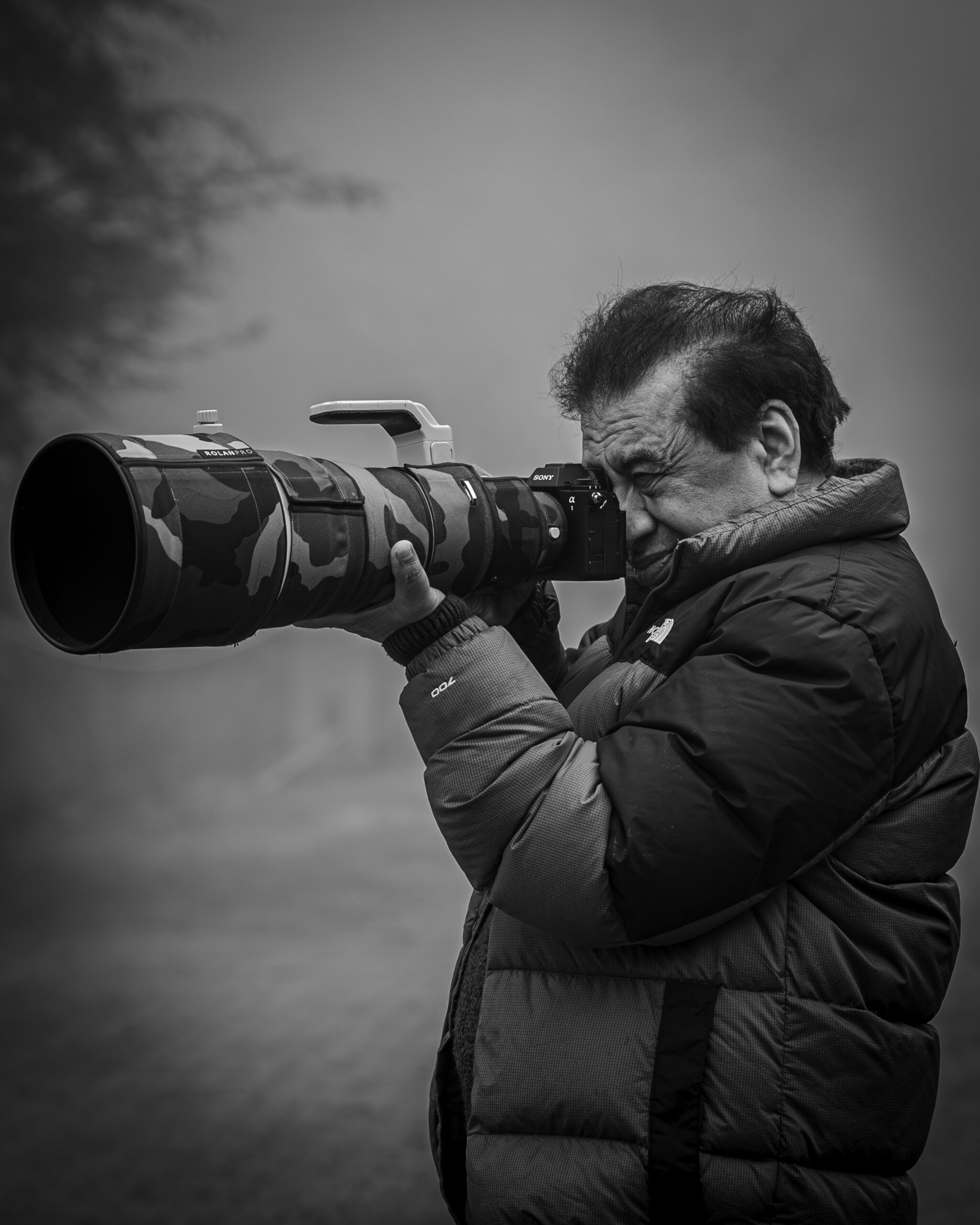
Yogesh Bhatia is a professional Wildlife photographer & mentor in India whose work reflects patience, observation, and a deep respect for nature. His journey in wildlife photography is shaped by countless hours in forests, observing animal behavior and waiting for moments that unfold naturally. Through his lens, wildlife is portrayed not just as subjects, but as living stories within their natural environment. His approach to Wildlife photography India focuses on authenticity rather than staged perfection, resulting in images that feel raw and immersive.