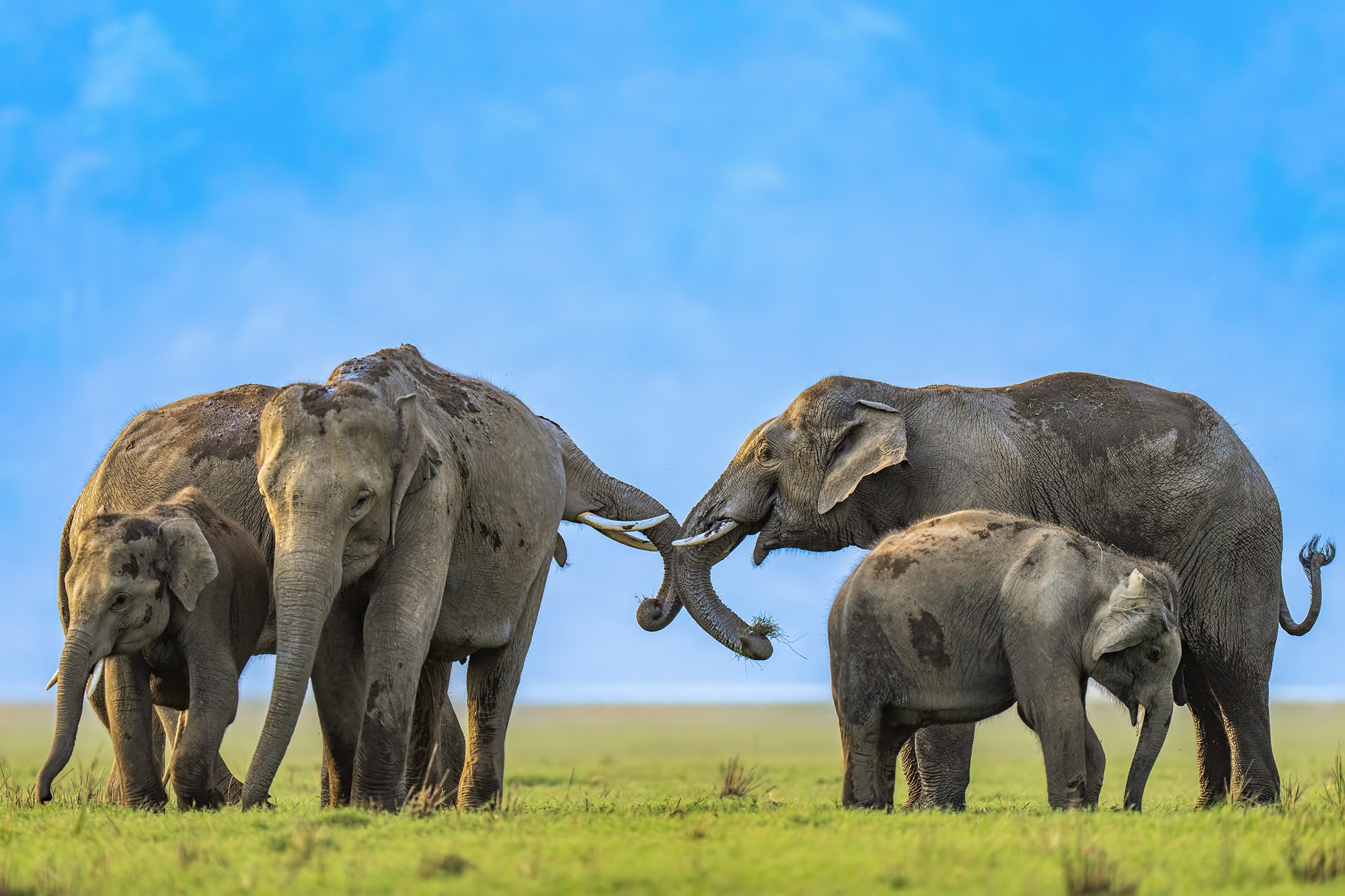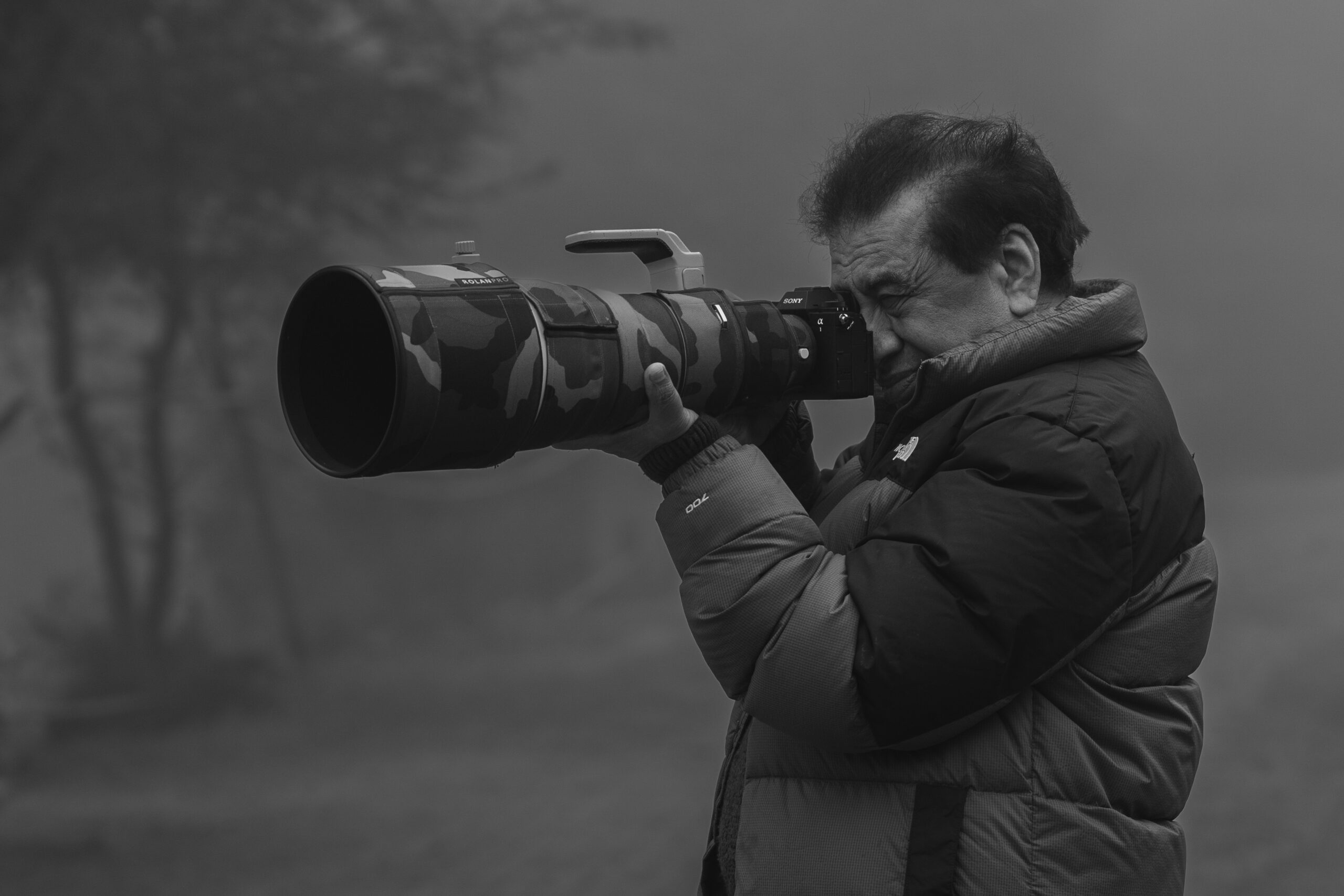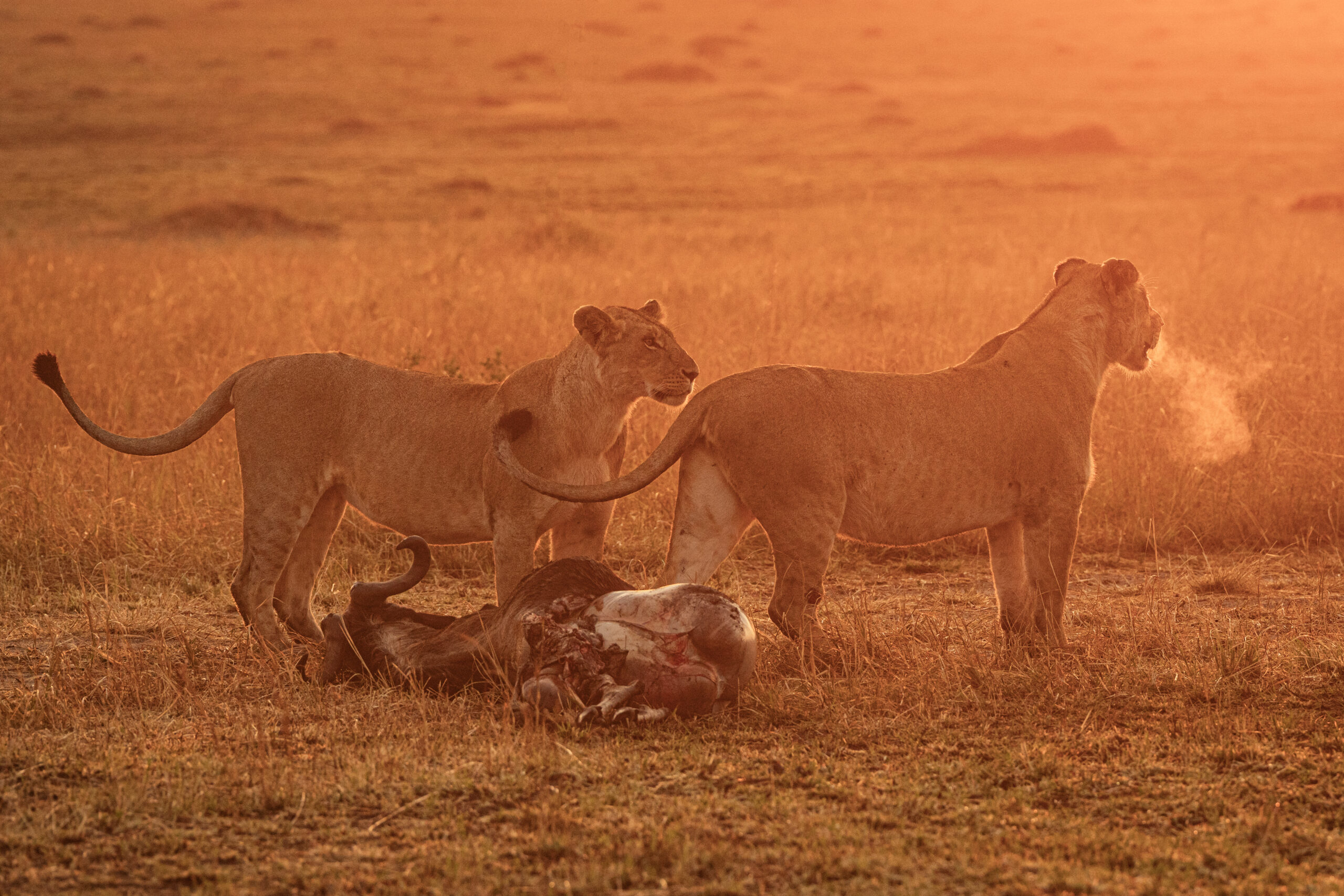
Anyone can buy a 500mm f/4 lens. You order it online, a courier delivers it, and within 48 hours you are holding the same glass that professional photographers carry into Corbett and Ranthambore. The camera, the sensor, the autofocus system, the burst rate, is the easy part. It always has been.
The hard part is standing in an open gypsy at 6:00 AM with a tiger twenty metres away, light failing, the animal already moving, and producing an image that someone would stop scrolling to look at. That specific gap between owning the gear and making the image is where a wildlife photography mentor operates.
Not every guide is a mentor. Not every photographer who teaches is a coach. The difference matters enormously, not just for the quality of images a student brings home from their first safari, but for the trajectory of their entire photographic practice over the years that follow.
This guide examines what genuine excellence in wildlife photography mentorship looks like, the technical, ethical, pedagogical, and human qualities that define a coach worth learning from. Whether you are considering a structured wildlife photography workshop, a private mentorship programme, or simply trying to evaluate who deserves your trust and your time in the field, the framework here will sharpen your judgement considerably.
The Core Traits of an Elite Wildlife Photography Coach
1. Deep Technical Knowledge Paired With Artistry
The single most common failure mode in wildlife photography instruction is teaching settings without context. A student who memorises ‘1/1600s, f/4, ISO 3200’ and applies it identically across a morning forest and an open grassland will get sharp but soulless images, correctly exposed, compositionally empty.
An elite mentor teaches the reasoning underneath the numbers. They explain why a fast-moving leopard in Zone 2 of Ranthambore demands a different shutter priority than a resting tiger at a water body in the golden hour. They teach the student to read a histogram before looking at the LCD preview. They explain that Animal Eye AF is a tool with specific failure conditions, low contrast, backlight, dense vegetation, and exactly how to adapt when those conditions arise.
But technical mastery alone does not produce images worth looking at. The coaches who genuinely transform students are those who can teach artistic perception alongside technical discipline. They teach how to see the difference between a tiger photograph and a tiger portrait, one records presence, the other communicates character. They teach the student to wait for the ear rotation, the directional gaze, the moment before movement rather than the movement itself. These are not settings. They are habits of observation, and they take a specific kind of mentor to transmit.
“I can teach anyone the correct shutter speed for a walking tiger in 45 minutes. Teaching someone to anticipate where the tiger will be in 8 seconds, based on its body language, that takes field hours, consistent feedback, and patience.”, Yogesh Bhatia
2. Ethical and Conservation Foundations That Are Non-Negotiable
A question worth asking any prospective mentor before paying a deposit: What do you do when the shot requires getting closer than the animal is comfortable with? The answer tells you everything you need to know.
A genuine wildlife photography coach treats animal welfare as a hard constraint, not a soft preference. They teach students that the forest’s trust, the accumulated habituation of wild animals to respectful human presence, is a shared resource that irresponsible photography erodes for every photographer who follows. Engine-off at sightings, silence as a professional standard, no flash, no baiting, no pressuring drivers for closer positions: these are not rules imposed from outside but values the mentor holds independently and transmits through example.
This ethical dimension is also, practically speaking, what separates images that feel authentic from those that feel staged. When a student understands that the tiger is behaving naturally because their presence is respectful, the quality of behaviour they observe improves. The image that results carries that authenticity in every frame. A mentor’s ethics and a student’s image quality are not separate considerations, they are the same consideration.
3. Tailored Pedagogy: The Ability to Teach to the Individual
A retired colonel joining his first wildlife photography workshop has different needs than a working photographer adding wildlife to an existing practice, who has different needs again from a 22-year-old with a beginner body and no field experience. The best mentors adapt, not by simplifying their knowledge for one and overwhelming the other, but by calibrating what to prioritise for each student at each stage.
Portfolio critique is where this calibration becomes visible. An experienced coach looks at a student’s images and identifies the specific failure pattern, not ‘your focus is soft’ but ‘your focus is soft consistently on subjects moving left-to-right, which tells me your Zone AF is positioned too far behind the eye; here is the adjustment.’ That level of diagnostic specificity requires both deep technical knowledge and genuine attentiveness to the individual’s practice.
It also requires patience with the pace of learning. Wildlife photography training is not a linear process, a student who masters exposure metering in one environment may struggle to transfer that understanding to a different park’s light conditions. The mentor who recognises this, who anticipates where the transfer will break down and builds a field exercise around it, is the one whose students make consistent, compounding progress rather than plateauing after the first workshop.
The Power of In-the-Field Learning
Classroom instruction has a specific and limited value in wildlife photography. You can understand depth of field intellectually. You can watch a demonstration video of tracking a moving subject with Continuous AF. You can memorise the exposure triangle until you can recite it in sequence. None of this prepares you for the moment a leopard drops from a tree branch fifteen metres from your vehicle and begins walking directly toward you.
The gap between knowing and doing in wildlife photography is crossed only in the field, and specifically, it is crossed most efficiently when a mentor is present in the same vehicle, watching what you do in real time, and correcting the specific error that is costing you frames. This is what makes a hands-on wildlife photography workshop or photography tour a categorically different learning experience from any remote or classroom-based instruction.
What Real-Time Field Mentorship Looks Like
In practice, the fieldwork session of a well-structured wildlife photography tour in India involves the mentor positioned in the same gypsy, observing the student’s handling posture, camera configuration, and reaction time at every sighting. The corrections are immediate and specific:
- ‘Your beanbag is too full, the lens is sitting rigid; move it forward six inches.’
- ‘You raised the camera after the tiger changed direction, pre-position while it’s stationary.’
- ‘You fired when it was walking. Wait. The head-turn is coming in three seconds, watch the ear.’
- ‘Your exposure compensation is +0.3; in this light on orange coat, pull back to -0.3 or the highlights on the shoulder will blow.’
These corrections take approximately four seconds each to deliver in the field. The same understanding, communicated in a classroom setting, takes twenty minutes and transfers to the field imperfectly. The time compression of real-time coaching is not a convenience, it is the mechanism through which the learning actually embeds.
Managing the Specific Challenges of Indian Safari Photography
India’s wildlife habitats present a set of conditions that make field coaching particularly valuable. The forest canopy at Corbett’s Dhikala zone at 6:00 AM drops light levels low enough that a student who has not experienced and adjusted for the condition before will underexpose the first eight frames before recognising the problem. The Rajasthan laterite dust at Ranthambore coats front elements within the first twenty minutes; a student who does not know to pre-clean between active drives will find their images carrying a subtle flare that is difficult to identify in post-processing.
Vehicle positioning, where in the gypsy to sit for which zone’s sighting angles, how to transfer body weight to reduce torque when swinging a heavy lens, is knowledge that cannot be acquired from video. The mentor who has run Ranthambore photography workshops, Kaziranga expeditions, and Corbett photography tours across seasons has accumulated a body of location-specific operational knowledge that translates directly to fewer missed frames for every student they guide.
The evening image review session, standard on Yogesh Bhatia’s wildlife photography workshops, closes the learning loop. The student sees the frame that failed, hears the specific diagnosis, adjusts the configuration, and applies the correction at the next morning’s gate entry. Within 48 hours of this cycle running twice, the improvement in keeper rate is measurable and significant.
How to Choose the Best Mentor for Your Journey
The wildlife photography training market has expanded substantially, and with that expansion has come significant variation in quality. Evaluating a prospective mentor honestly, before committing time and money, protects the student and raises the standard of instruction across the field. Here is a practical, non-negotiable framework.
The Portfolio Test
A mentor’s own published portfolio is the first and most honest evidence of their capability. Look for diversity, not just quantity. A portfolio of 200 tiger images from Ranthambore shot across five visits demonstrates persistence and access; it does not demonstrate range. A strong mentor’s portfolio shows evidence of different species, different habitats, different light conditions, and different compositional approaches. It includes environmental portraits, behavioural sequences, and landscape-wildlife combinations, not just tight telephoto portraits of the same subject from the same zone.
Publication record matters, not as a proxy for quality, but as external validation that the work has been assessed and selected by editors independent of the photographer. Media features, conservation campaign selections, and award shortlistings (such as the Wildlife Photographer of the Year shortlist) are specific and verifiable signals, distinct from self-reported claims.
Student Testimonials, What to Look For
Generic testimonials (‘excellent experience, highly recommend’) carry limited information. The testimonials worth reading are specific: they identify what the student learned, how their practice changed, and, crucially, what their images looked like before versus after. Participant reviews for Yogesh Bhatia’s photography tours include references to specific skills, named locations, and measurable improvements, the kind of specificity that only comes from authentic field experience.
The Teaching Scope Question
Before booking any wildlife photography workshop, ask directly: does the instruction include post-processing? A mentor who teaches field craft but sends students away without addressing RAW workflow, noise reduction, and colour calibration is leaving the last third of the photographic process unaddressed. The image captured in the field is raw material; the final image is built in post. A complete wildlife photography coach teaches the full pipeline.
A Practical Evaluation Checklist
- Portfolio: Multi-species, multi-habitat, demonstrable range, not a single-subject repetition
- Credentials: Verifiable awards, media publications, conservation partnerships
- Group size: Maximum 4 participants per vehicle; more than this is a safari, not a mentorship
- Teaching scope: Field technique + camera settings + post-processing + image critique
- Student evidence: Specific, verifiable testimonials from named participants across skill levels
- Ethics on record: Public position on animal welfare, baiting, disturbance, not just policy but practice
Photographers considering 1-on-1 private wildlife photography mentorship should additionally ask about session structure, how much time is field-based versus review-based, and how the programme adapts to the student’s specific photographic goals rather than a fixed curriculum.
For those earlier in the decision process, still assessing whether wildlife photography as a serious pursuit is the right direction, the mentor’s blog, published interviews, and social media output offer an unguarded view of how they think about the craft. A mentor worth following writes and speaks about photography with the same specificity they bring to the field.
Invest in the Learning, Not Just the Lens
The photographers whose work earns genuine attention, whose images get published, shortlisted, collected, are not exclusively those with the most expensive equipment. They are, overwhelmingly, those who invested deliberately in their own development: in time in the field, in honest critique, in the company of someone who had already solved the problems they were still encountering.
A great wildlife photography mentor compresses years of hard-won field learning into a structure a student can absorb and apply. They carry deep technical knowledge and transmit it with clarity, hold ethical standards and teach them by example, and adapt their instruction to the individual rather than delivering a fixed script to every cohort.
The next lens upgrade will improve your images marginally. The right wildlife photography workshop, led by a mentor who genuinely teaches, will change how you see, how you think, and how you shoot for every safari that follows. That is a different category of return entirely. Start here.
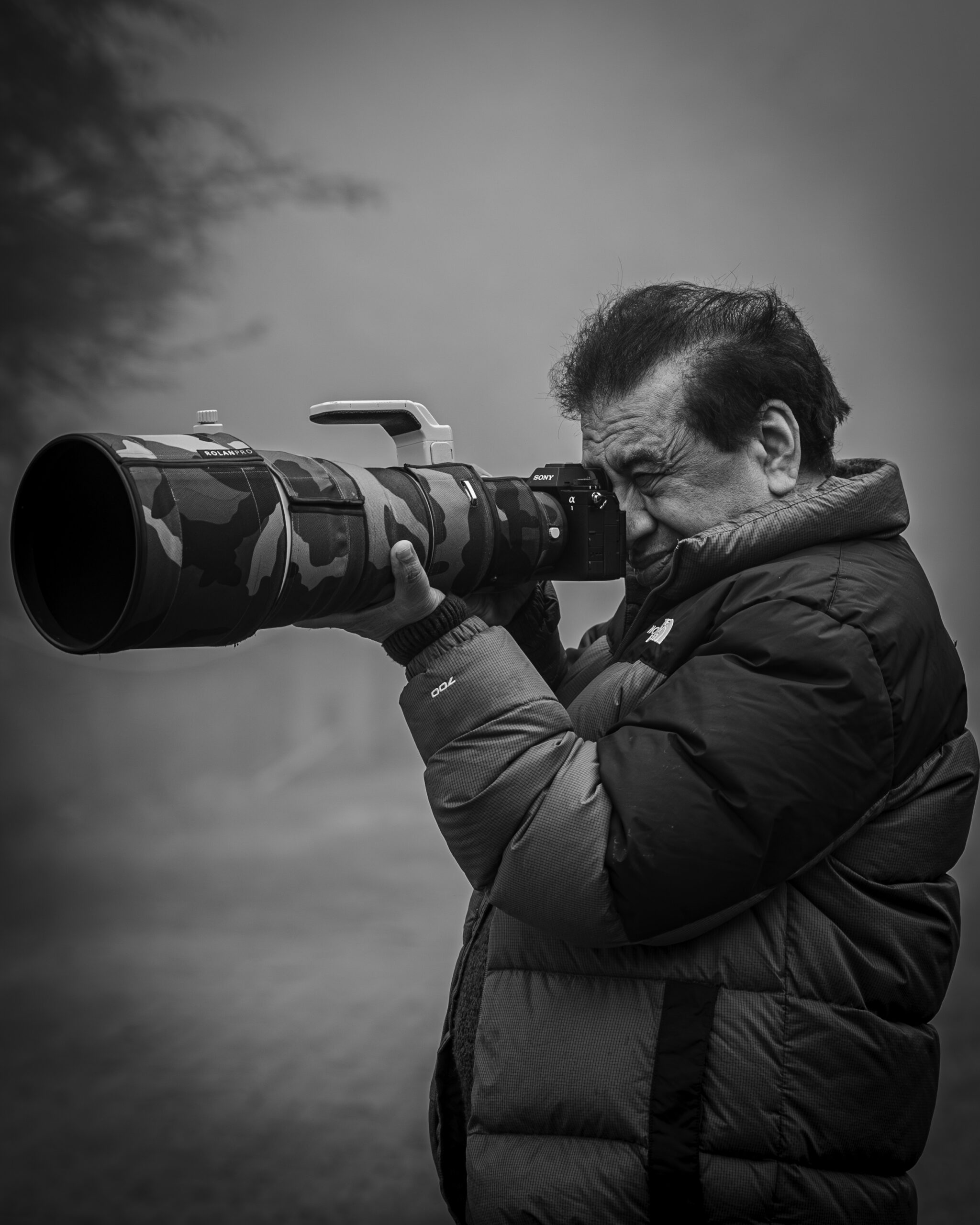
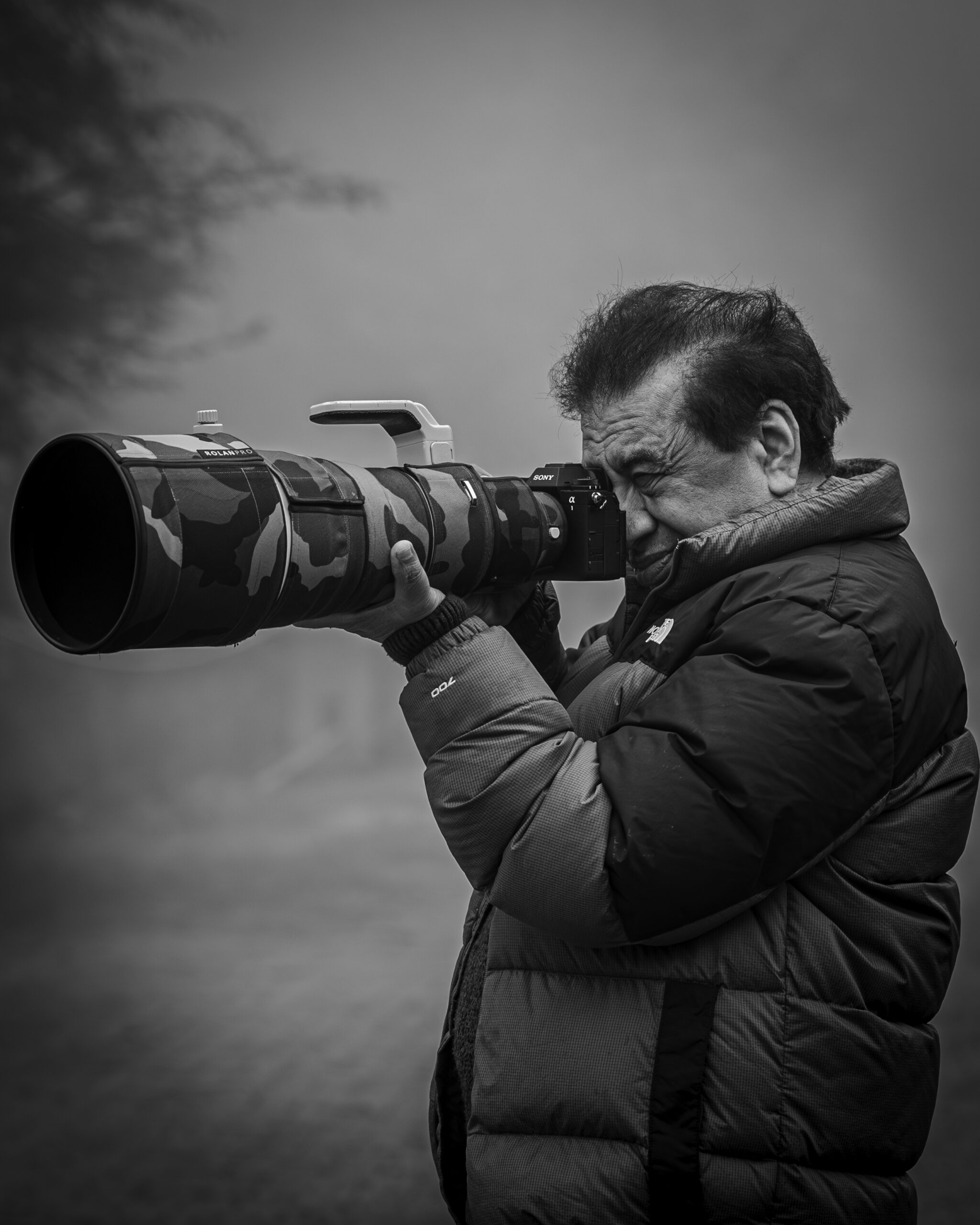
Yogesh Bhatia is a professional Wildlife photographer & mentor in India whose work reflects patience, observation, and a deep respect for nature. His journey in wildlife photography is shaped by countless hours in forests, observing animal behavior and waiting for moments that unfold naturally. Through his lens, wildlife is portrayed not just as subjects, but as living stories within their natural environment. His approach to Wildlife photography India focuses on authenticity rather than staged perfection, resulting in images that feel raw and immersive.