SEO Meta Information
Meta Title: Masai Mara Wildlife Photography: A Guide to Using Light
Meta Description: Discover how light transforms Masai Mara wildlife photography. Learn golden hour, silhouette & backlighting techniques from wildlife photographer Yogesh Bhatia.
URL Slug: https://yogeshwildlifephotography.com/masai-mara-wildlife-photography-light-guide/
The Magic of Light in the Masai Mara: A Guide to Wildlife Photography
Masai Mara photography is often associated with spectacular wildlife, dramatic predator sightings and the Great Migration. But for a wildlife photographer, the Masai Mara offers something even more powerful: extraordinary natural light. The golden grasslands, open African skies, acacia trees, dust-filled plains and low morning and evening sun create some of the most beautiful conditions for wildlife photography in Kenya. For photographers who want to explore these landscapes through structured wildlife photography tours, the Mara is one of the richest destinations in the world.
For photographers, the Masai Mara is not simply a place to photograph lions, cheetahs, leopards, elephants and rhinos. It is a natural studio where light, wildlife, landscape, atmosphere and composition come together.
Learning to understand and use this light can transform an ordinary wildlife photograph into a powerful artistic image.
Sometimes the best photograph from a safari is not the one showing every detail of an animal.
Sometimes it is the photograph where light tells the story.
Why Light Is So Important in Masai Mara Photography
When photographers visit the Masai Mara, the first instinct is naturally to look for wildlife.
Where is the lion?
Where is the cheetah?
Where is the leopard?
Where is the herd of elephants?
But experienced wildlife photographers in the Masai Mara — the kind of eye developed through years of dedicated mentoring — begin asking another set of questions:
- Where is the light coming from?
- How low is the sun?
- Is the subject backlit?
- Can I create a silhouette?
- Is there dust in the air?
- Can I use the landscape?
- Is the background clean?
- Can the animal be separated from the background?
- Can the sky become part of the composition?
- Is there enough negative space?
- Can the light create emotion?
This change in thinking can completely transform your photography.
The animal remains the subject, but light becomes the storyteller.
The same lion photographed at midday can look completely different when photographed at sunrise or sunset.
The same cheetah can become a completely different image when it is placed against a glowing African sky.
This is one of the great lessons of Masai Mara wildlife photography.
The Masai Mara: A Natural Studio for Wildlife Photographers
The Masai Mara is uniquely suited to creative wildlife photography because of its vast, open landscape.
The grasslands stretch towards the horizon.
The sky dominates the landscape.
Acacia trees provide natural graphic elements.
Dust creates atmosphere.
The low African sun creates beautiful directional light.
Together, these elements give photographers enormous creative freedom.
The Masai Mara provides opportunities for:
- Golden hour wildlife photography
- Sunrise photography
- Sunset wildlife photography
- Backlighting
- Rim lighting
- Silhouette photography
- Environmental wildlife portraits
- Minimalist wildlife photography
- Wildlife landscapes
- Atmospheric photography
- Creative composition
- Wildlife photography using negative space
This is why the Mara is such an extraordinary destination for African wildlife photography.
You don’t always need dramatic animal behaviour.
Sometimes the environment and light create the photograph.
Golden Hour Wildlife Photography in the Masai Mara
Golden hour is one of the most important periods for wildlife photographers.
It occurs shortly after sunrise and before sunset, when the sun is low and the light becomes warmer and more directional.
In the Masai Mara, golden-hour light can transform the entire landscape.
The grass can glow.
Dust can become luminous.
Animal fur can take on warm highlights.
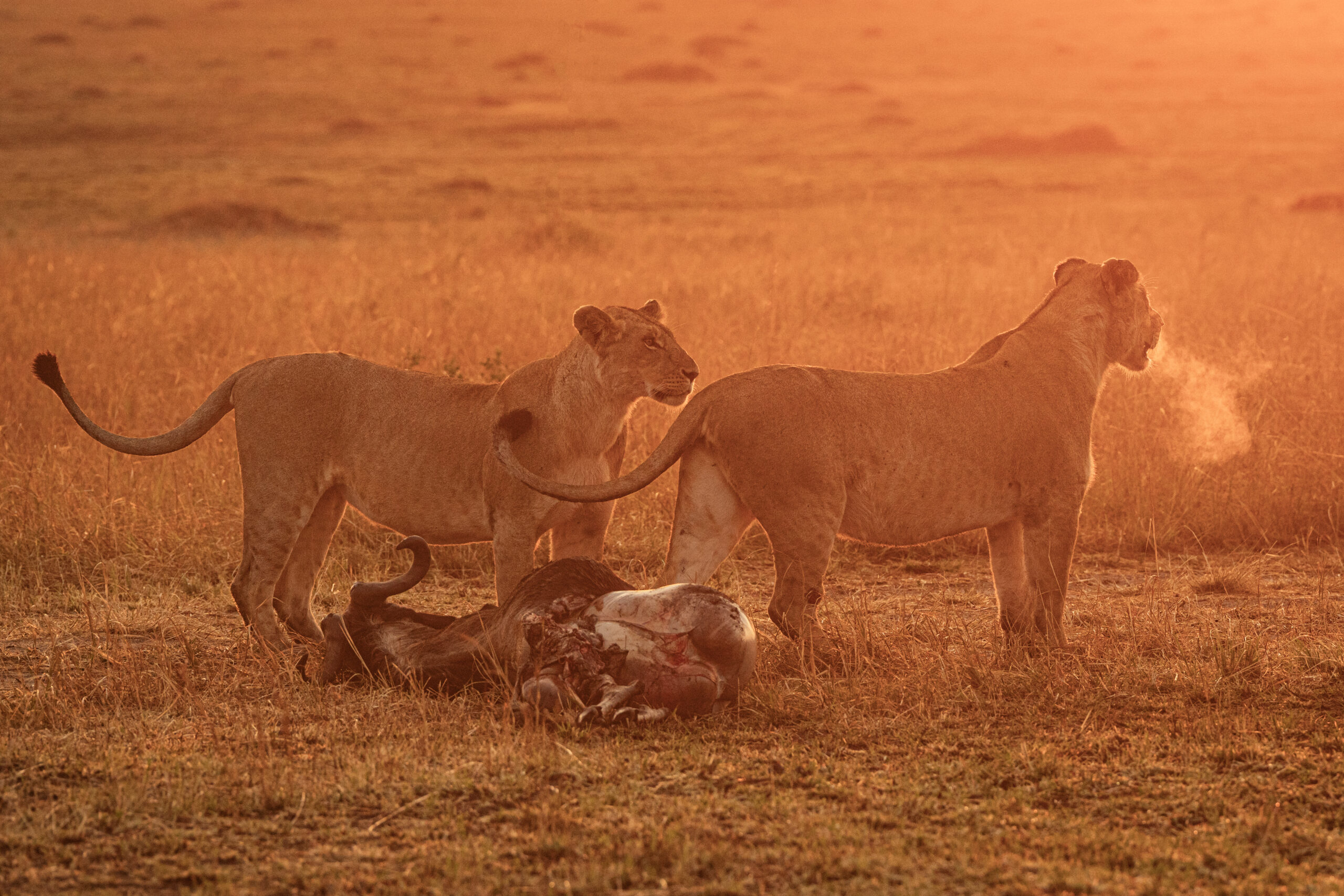
The edges of a lion’s mane can glow.
A giraffe can become a beautiful silhouette.
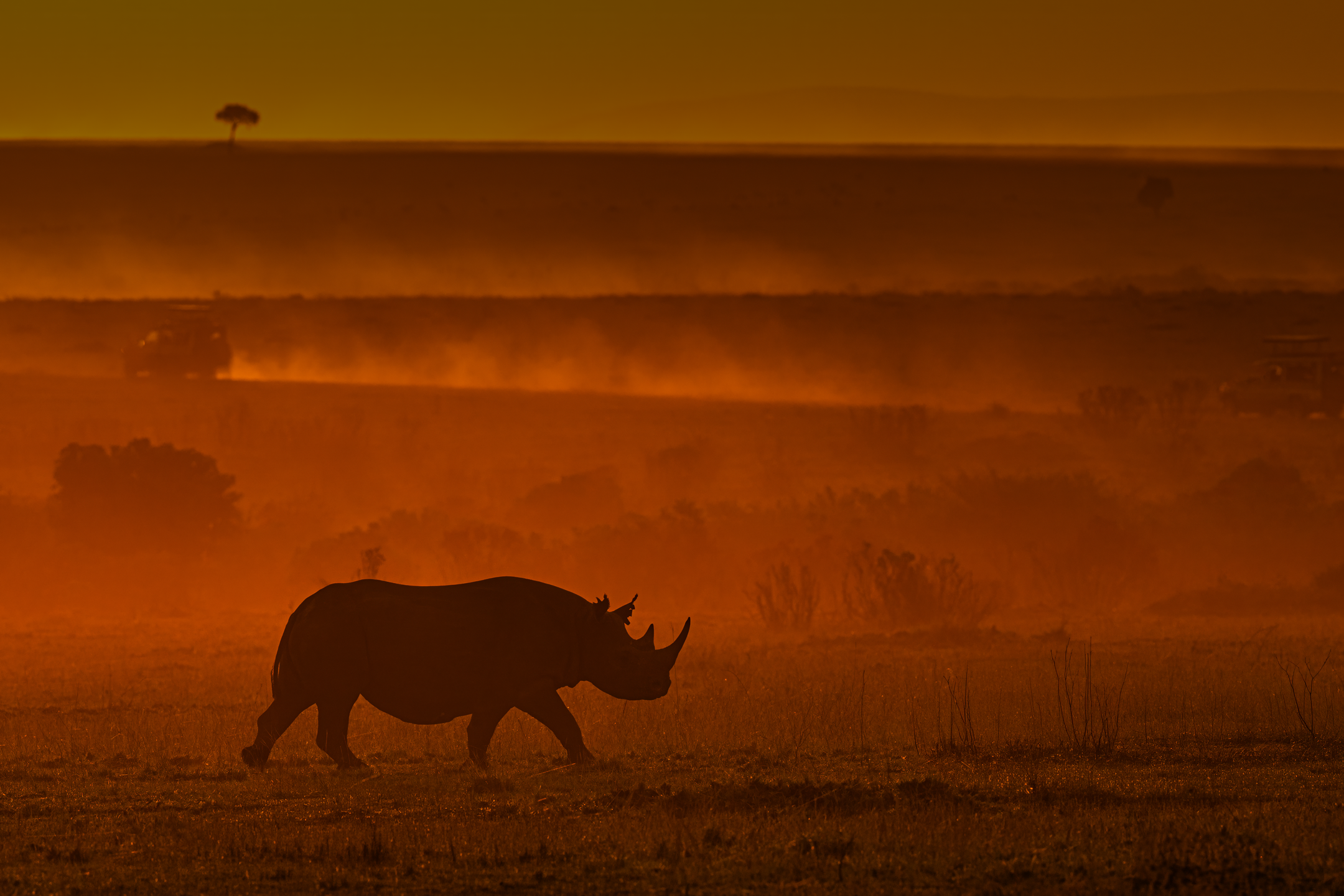
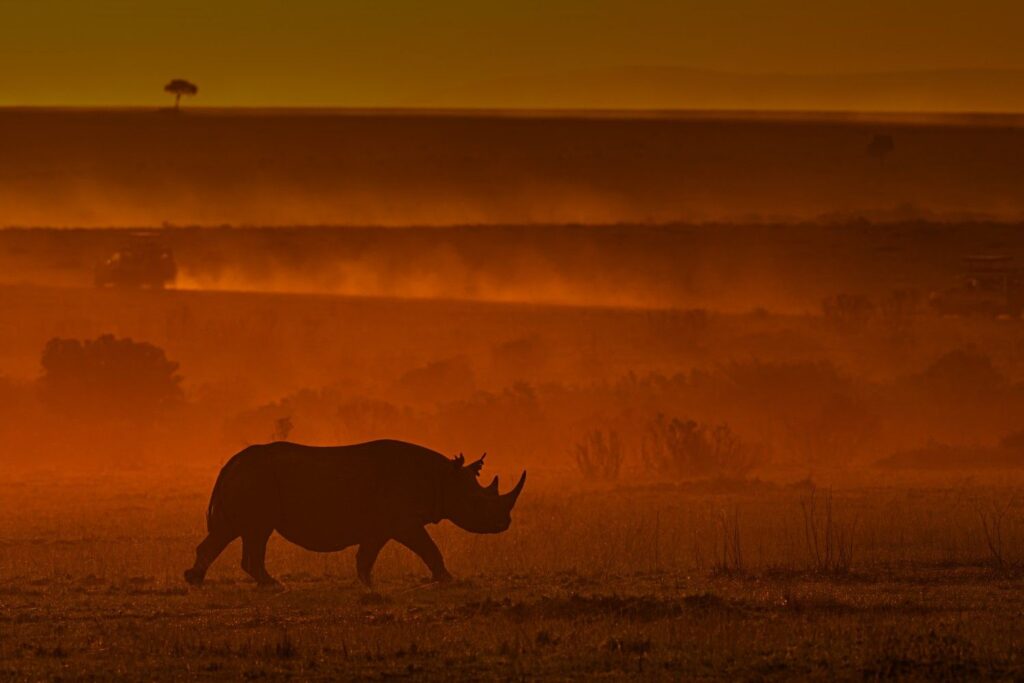
A rhino can stand out against an orange horizon.
This is why golden hour photography in the Masai Mara is so rewarding.
However, golden light is not simply about colour.
It is about direction.
The position of the sun relative to the animal, background and photographer can completely change the photograph.
Before taking the picture, look carefully at the scene.
Where is the sun?
Where is the animal moving?
What is behind it?
Can you position yourself so that the light works in your favour?
Sometimes moving only a few metres—or simply waiting for the animal to move—can dramatically improve the composition.
Sunrise Photography in the Masai Mara
Early morning is one of the most exciting times for Masai Mara wildlife photography.
Before sunrise, the landscape can appear quiet and mysterious.
The horizon gradually begins to brighten.
The first rays of sunlight touch the grass.
The colours slowly change.
Then the sun rises above the horizon and the entire landscape begins to glow.
Photographers should think of sunrise as a period of changing light rather than a single event.
The light immediately before sunrise can create soft, muted images.
The first sunlight can produce beautiful silhouettes.
The period shortly afterwards can provide warm directional light.
Wildlife behaviour can also be particularly interesting during the cooler morning hours.
This combination makes early morning one of the best times for wildlife photography in the Masai Mara.
Backlighting in Wildlife Photography
Backlighting is one of the most effective creative techniques for wildlife photographers.
Backlighting occurs when the main light source is positioned behind the subject.
Instead of illuminating the front of the animal, the sun illuminates its edges.
The result can be spectacular.
The animal may become a silhouette.
Its outline may glow.
Dust particles can become visible.
Grass can catch golden highlights.
The background can become soft and luminous.
In the Masai Mara, backlighting works particularly well because the open landscape gives photographers the opportunity to position themselves according to the direction of the sun.
Instead of asking only:
“Where is the animal?”
ask:
“Where is the animal in relation to the sun?”
That simple change in thinking can lead to much more creative wildlife photographs.
Silhouette Photography in the Masai Mara
A silhouette is one of the most powerful techniques for creating artistic wildlife photographs.
It is also one of the simplest.
But it requires a different way of seeing.
Most wildlife photographers are trained to look for detail.
Sharp eyes.
Detailed fur.
Feathers.
Skin texture.
But silhouette photography is about something different:
shape.
The outline of a lion’s mane can be instantly recognisable.
A rhino’s horn creates a strong graphic shape.
An elephant’s trunk creates a distinctive profile.
A giraffe’s long neck becomes a powerful visual line.
A bird in flight can become a beautiful silhouette against the African sky.
The challenge is to achieve clean separation.
Avoid overlapping legs.
Avoid merging the head with trees or other animals.
Wait for the right posture.
Wait for the right gesture.
Then make the photograph.
A silhouette does not need detail. It needs shape.
The Rhino and the African Landscape
One of the most powerful ways to photograph a rhino in the Masai Mara is not necessarily as a close-up portrait.
Imagine a rhino standing on a ridge at sunset.
The animal becomes a dark silhouette.
The sky behind it glows warm.
A distant acacia tree provides another visual element.
Dust creates atmospheric depth.
The rhino remains unmistakable, but the photograph becomes much more than a record of the animal.
It becomes a photograph about Africa.
This is an important principle in wildlife photography.
Don’t always ask:
“How close can I get?”
Sometimes ask:
“How much of the landscape can I use?”
Environmental wildlife photography can communicate the relationship between an animal and its habitat far more effectively than a tight portrait.
Using Dust in Masai Mara Photography
Dust is one of the most beautiful natural elements available to photographers in the Masai Mara.
When illuminated by the low sun, dust can become almost luminous.
It creates:
- Atmosphere
- Depth
- Separation
- Layers
- Warmth
- Motion
- A strong sense of place
A vehicle crossing the plains may create a cloud of dust.
An animal moving through dry grass can disturb particles in the air.
When the sunlight catches those particles, an ordinary scene can suddenly become highly atmospheric.
Instead of trying to eliminate atmospheric elements, wildlife photographers should learn to use them.
Look for the atmosphere, not just the animal.
The Golden Haze of the Masai Mara
The Masai Mara can produce beautiful atmospheric conditions, particularly around sunrise and sunset.
Distant animals may appear softer.
Acacia trees may gradually disappear into the horizon.
The landscape can develop several layers.
This atmospheric perspective gives photographs depth.
Not every part of the frame needs to be perfectly sharp and detailed.
Sometimes softness adds mood.
Sometimes haze creates mystery.
Sometimes a distant animal surrounded by atmospheric light communicates the scale of the landscape better than a close-up photograph.
This is particularly important when creating environmental wildlife photography.
Sunset Wildlife Photography in the Masai Mara
As the sun begins to fall, the quality of light changes rapidly.
The harshness of midday disappears.
The shadows become longer.
The grass begins to glow.
The colours become warmer.
The landscape becomes more dramatic.
This is when photographers should slow down and observe.
Don’t leave the scene simply because you have already photographed the animal.
The best photograph may still be coming.
A lion may move into the golden grass.
A cheetah may climb a mound.
An elephant may cross the horizon.
A giraffe may stand beside an acacia tree.
The animal may not have changed dramatically.
The light has changed.
And sometimes that is enough to create a completely new photograph.
The Sun as a Compositional Element
The sun does not always need to remain outside the frame.
In creative wildlife photography, the sun itself can become part of the composition.
It can act as:
- A visual anchor
- A strong geometric shape
- A source of backlight
- A rim-light source
- A background element
- A compositional counterweight
The enormous skies of the Masai Mara make this especially effective.
A small animal beneath a large sun can create a sense of scale.
A silhouette against the setting sun can become minimalist.
A wildlife subject positioned near the sun can create a powerful graphic composition.
The sun is therefore not simply a source of exposure.
It can become part of your story.
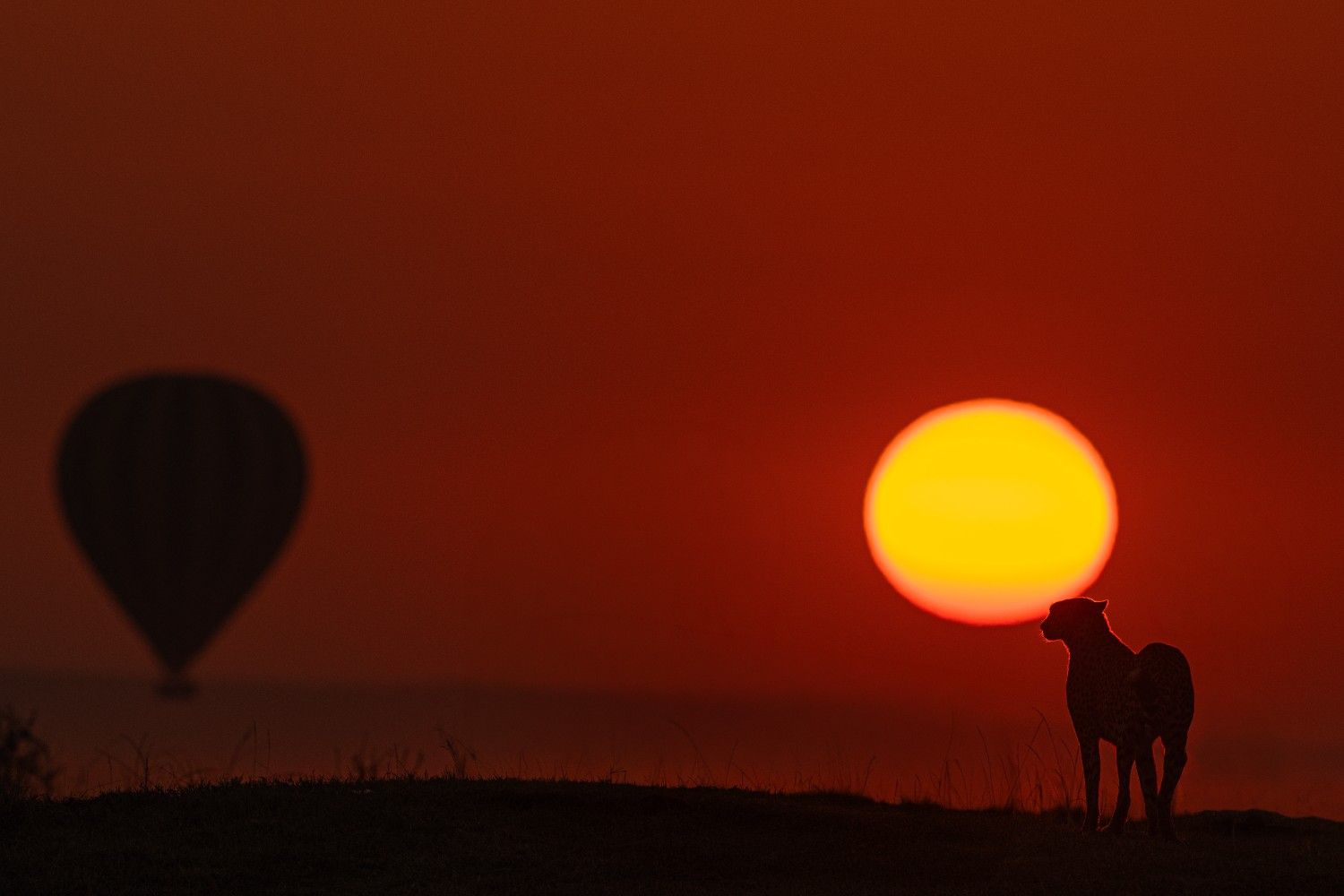
The Cheetah, the Sun and the Hot-Air Balloon
One of the most interesting creative opportunities in the Masai Mara is the combination of wildlife and the iconic hot-air balloons that float above the plains.
Imagine a cheetah silhouetted against the morning or evening sky.
The sun forms a large visual anchor.
A hot-air balloon appears on the opposite side of the frame.
Suddenly, the photograph has three major elements:
Sun + cheetah + balloon.
The cheetah tells the wildlife story.
The sun creates drama.
The balloon provides balance, scale and context.
The large sky creates negative space.
The photograph becomes more than a wildlife portrait.
It becomes a photograph about the Masai Mara.
This is a powerful lesson in composition: sometimes the strongest photograph is created by the relationship between several simple elements.
Negative Space in Wildlife Photography
The huge skies and open grasslands of the Masai Mara make negative space particularly effective.
Wildlife photographers often feel compelled to fill the frame.
But sometimes giving the subject more space creates a stronger photograph.
A small cheetah beneath a huge sky can communicate isolation and scale.
A lone giraffe beneath a dramatic sunset can create a minimalist composition.
An elephant crossing an enormous horizon can communicate the vastness of its environment.
Negative space is not wasted space.
It allows the viewer to breathe.
It gives the subject importance.
And it can create a strong emotional response.
When composing an environmental wildlife photograph, don’t be afraid to leave large areas of the frame relatively empty.
Wildlife Photography and the Direction of Light
Understanding the direction of light is fundamental to wildlife photography.
There are several basic lighting situations to look for.
Front Light
The light comes towards the front of the animal.
This can provide good detail and even exposure, particularly when the light is soft.
Side Light
Light comes from the side.
This can reveal texture and form and create stronger shadows.
Backlight
The light comes from behind the subject.
This is particularly useful for silhouettes, rim lighting and atmospheric images.
Top Light
The sun is high overhead.
This can produce harsh shadows and is often less flattering for traditional wildlife portraits.
However, it can still work for graphic compositions and certain behaviours.
Learning to recognise these lighting situations will help you make better decisions before pressing the shutter.
Why Midday Light Is Not Always the Best
The Masai Mara can produce beautiful wildlife photography throughout the day, but midday light is usually much harder to control.
The sun is higher.
Shadows become stronger.
Contrast increases.
The light can become harsh.
This does not mean photographers should stop photographing.
Instead, change your expectations.
Use strong shadows.
Look for graphic compositions.
Look for unusual behaviour.
Look for animals under trees.
Look for patterns.
Use the contrast creatively.
The important lesson is not that one kind of light is always good and another is always bad.
It is that different light requires different photographic decisions.
Clouds and Dramatic Light in the Mara
A completely clear sky is not always ideal.
Clouds can make a sunset dramatically more interesting.
They can soften the light.
They can create contrast.
They can produce breaks of sunlight across the grasslands.
A dark cloud behind a brightly illuminated animal can create excellent separation.
Clouds can also add scale and drama to environmental photographs.
So don’t necessarily wish for perfect weather.
Sometimes imperfect weather produces the most interesting light.
Light, Background and Subject Separation
One of the simplest ways to improve a wildlife photograph is to understand the relationship between the subject and background.
A dark animal against a bright background can create powerful separation.
A backlit animal can glow against a darker background.
Golden grass can provide a warm background.
A distant landscape can create atmospheric separation.
Before pressing the shutter, look beyond the animal.
Ask:
What is happening behind my subject?
A spectacular animal with a distracting background can produce an ordinary photograph.
A well-composed animal against beautiful light and a clean background can produce a memorable image.
Light and Composition Work Together
Light and composition should never be treated as completely separate subjects.
Light determines what attracts attention.
Composition determines where that attention goes.
A brightly illuminated patch of grass can become a visual anchor.
A dark area can become negative space.
A glowing dust cloud can become a secondary subject.
A bright sun can dominate the frame.
A silhouette can simplify the entire composition.
This is why learning to photograph the Masai Mara is such a valuable education in wildlife photography.
The landscape constantly teaches you to think about light and composition together.
Patience: The Most Important Wildlife Photography Skill
The perfect combination of light and wildlife rarely happens immediately.
You may find the perfect animal.
You may have beautiful light.
You may have an excellent background.
But the animal may be facing away.
Its legs may overlap.
It may move into shadow.
A vehicle may appear in the background.
The solution is often simple:
Wait.
Wildlife photography rewards patience.
The photographer cannot control the animal.
But you can control your position, your composition, your exposure and your readiness.
When the animal finally enters the perfect patch of light, you need to be ready.
The photograph may last only a second.
Camera Settings for Creative Wildlife Photography
Modern cameras provide enormous technical advantages for wildlife photographers. Fast autofocus, animal eye detection, high frame rates, excellent dynamic range and high-resolution sensors allow photographers to concentrate more on the creative possibilities of the scene. Choosing the right gear matters too — see our guide to the best camera and lens for wildlife photography for practical recommendations.
However, camera settings should support your vision rather than control it.
For fast-moving wildlife, a high shutter speed may be necessary.
For silhouettes, exposure should generally be based more on the bright background than the dark animal.
For backlit subjects, careful exposure can preserve the mood of the light.
For environmental compositions, aperture can be used to control how much of the landscape remains recognisable.
The important point is to understand why you are choosing a setting.
Technology gives you possibilities.
Your vision decides how to use them.
From Wildlife Documentation to Wildlife Art
Technical quality is important.
Sharpness is important.
Correct exposure is important.
Autofocus performance is important.
But technical perfection alone does not create a memorable wildlife photograph.
A photograph can be perfectly sharp and still feel ordinary.
Another photograph may contain a silhouette, limited detail and large areas of negative space—and remain in someone’s memory for years.
Why?
Because it communicates something.
It creates emotion.
It tells a story.
This is where wildlife photography moves beyond documentation.
Art begins when the photographer starts interpreting the subject rather than simply recording it.
How the Masai Mara Can Change the Way You Photograph Wildlife
The greatest lesson of the Masai Mara is not simply how to photograph African wildlife.
It is how to see.
Once you begin paying attention to the Mara’s light, you start noticing light everywhere. You begin seeing the first rays of sunlight in an Indian forest. You notice how mist separates a tiger from the background. You recognise the potential of a bird flying across an open sky.
You start waiting for a leopard to enter a patch of light.
You begin using negative space.
You start looking at the environment instead of only the animal.
In other words, Masai Mara photography can teach you to become a better wildlife photographer anywhere in the world.
My Approach to Wildlife Photography in the Masai Mara
When I conduct wildlife photography trips and mentoring sessions in the Masai Mara, I encourage photographers to look beyond the obvious.
Don’t simply ask:
“What animal can I photograph?”
Ask:
“What can the light give me today?”
Look for silhouettes.
Look for rim light.
Look for golden grass.
Look for dust.
Look for reflections.
Look for shadows.
Look for unusual backgrounds.
Look for environmental compositions.
Look for relationships between multiple elements.
And most importantly, learn to wait.
The objective is not to return from the Masai Mara with hundreds of photographs that simply prove you saw wildlife.
The objective is to return with photographs that have something to say.
Final Thoughts: Let the Light Lead You
The Masai Mara is one of the world’s greatest destinations for wildlife photography.
Its wildlife is extraordinary.
Its landscape is spectacular.
But its light is what can transform a photograph.
The first golden rays of sunrise.
The warm evening glow.
The illuminated dust.
The rim light around a lion.
The silhouette of a rhino.
The long shadow of an elephant.
The golden grass surrounding a cheetah.
The enormous African sky.
And sometimes, the magical combination of a cheetah, the sun and a hot-air balloon.
These moments demonstrate why Masai Mara photography can be so much more than wildlife documentation. It can be environmental photography. It can be storytelling. It can be fine-art photography — browse examples in our wildlife photography gallery — and it can teach us something fundamental about photography itself.
Don’t wait only for the perfect animal. Look for the perfect light.
Then wait for the animal to enter it.
Because when light, subject, composition and moment come together, a wildlife sighting becomes a photograph.
And sometimes, that photograph becomes art.
Ready to experience this yourself? Get in touch to plan your own Masai Mara wildlife photography journey.
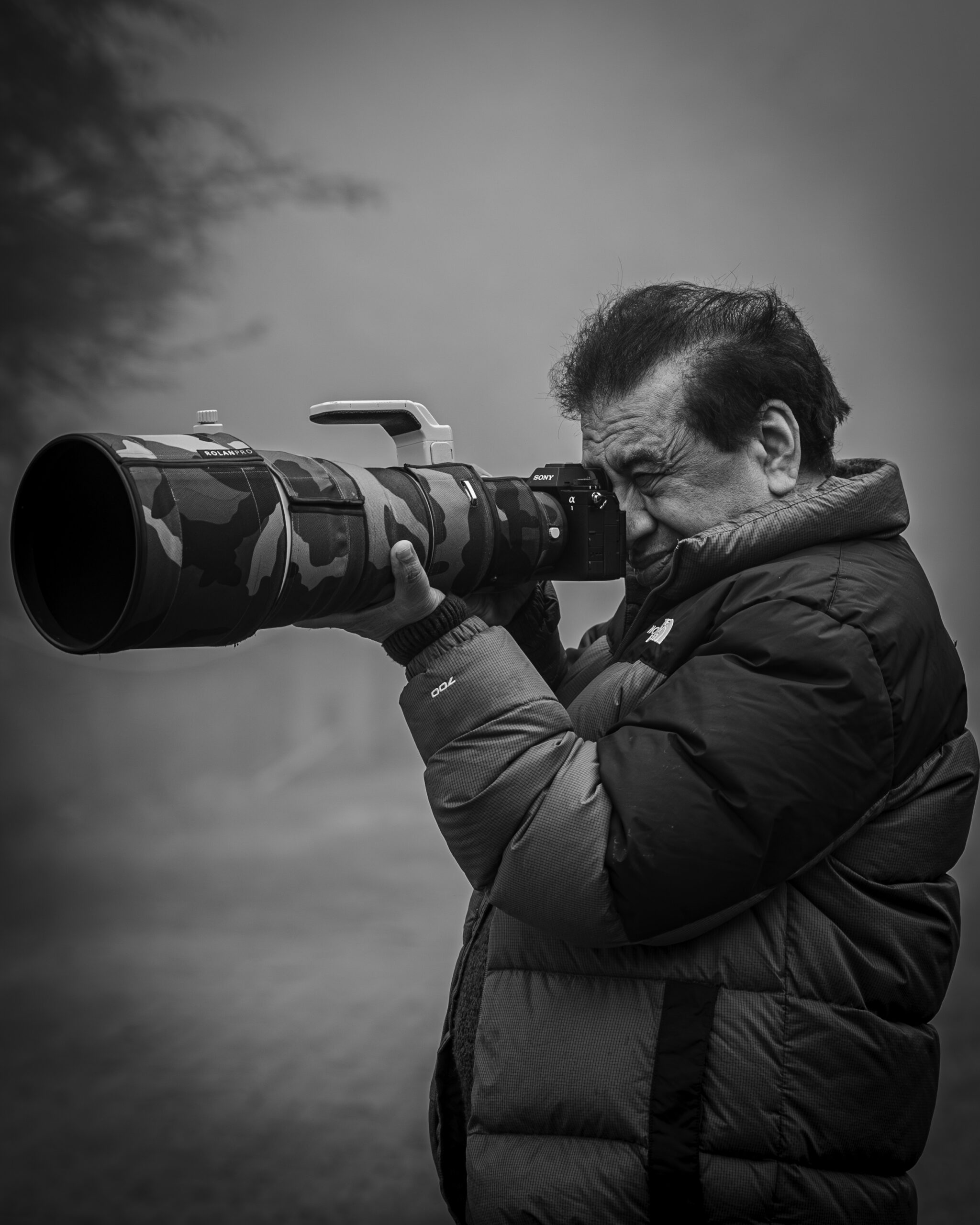
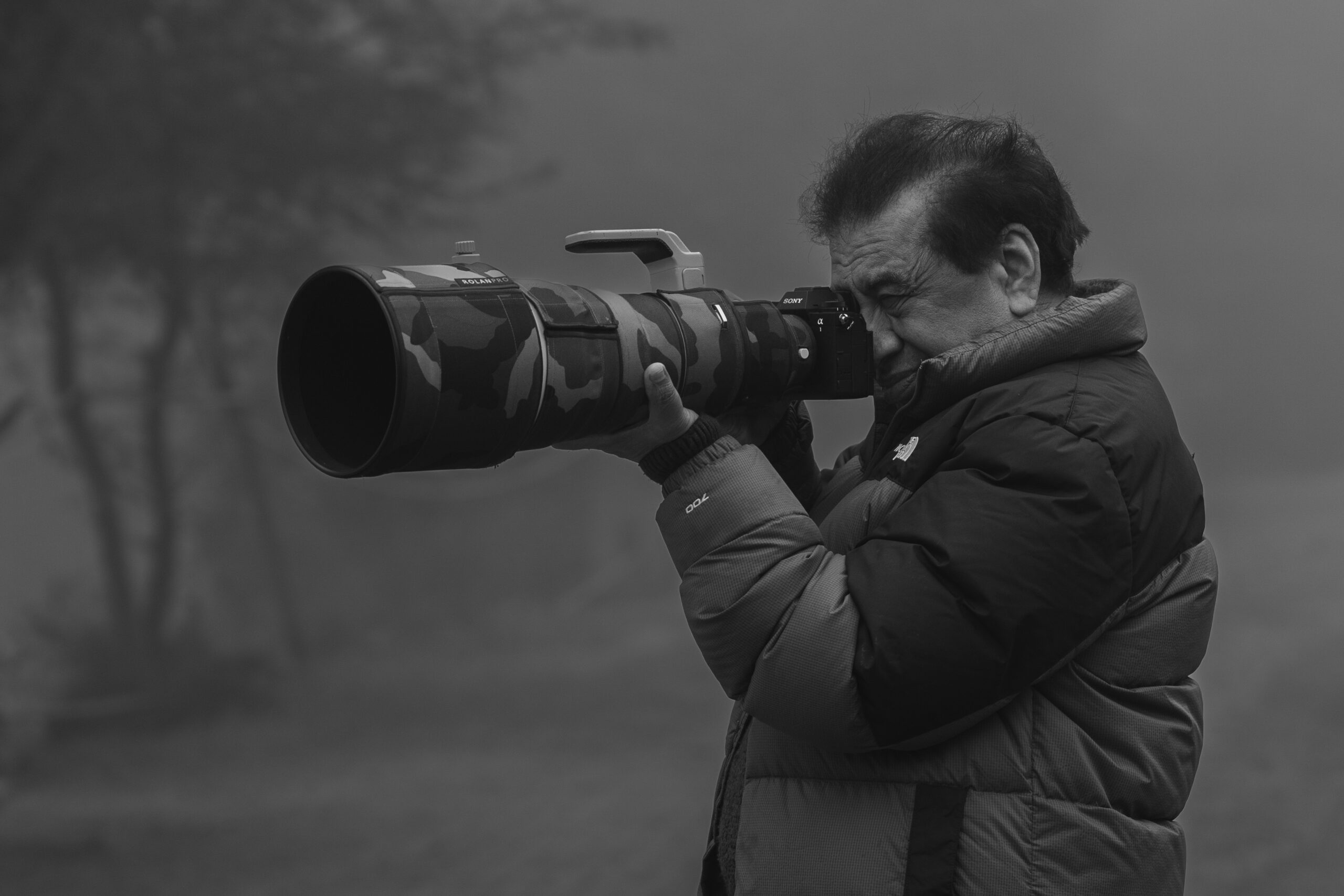
Yogesh Bhatia is a professional Wildlife photographer & mentor in India whose work reflects patience, observation, and a deep respect for nature. His journey in wildlife photography is shaped by countless hours in forests, observing animal behavior and waiting for moments that unfold naturally. Through his lens, wildlife is portrayed not just as subjects, but as living stories within their natural environment. His approach to Wildlife photography India focuses on authenticity rather than staged perfection, resulting in images that feel raw and immersive.